Nature’s Wild Blue Trick: Why Real Blue Animals Are So Rare in California
Ever notice? Really, how few truly blue animals exist? No royal blue tigers. Ever. Not roaming the San Joaquin Valley. No sapphire squirrels climbing eucalyptus trees, either. Wildlife boasts pretty much every color you can think of. But blue? Blue’s the weird one. A total oddball. But when nature does nail it, like with a gorgeous butterfly wing or a local blue jay feather, whoa. It’s usually a hella spectacular sight. Pure magic, actually. All thanks to structural coloration.
So how does nature even do these dazzling blues? No blue paint. Zero. It’s a wild ride through physics, chemistry. And big evolutionary brains. Let’s get into it.
Tiny Stuff Makes Blue, Not Paint
Think about it: Most colors you see on animals? Reds, oranges, yellows, browns, blacks? They come from pigments. These are just small organic bits. They suck up certain light colors and bounce back the rest. Butterflies, birds, us even – we grab these from what we eat. Flamingos? Perfect example. Born gray. But all those yummy carotenoids in their food turn ’em pink. You kinda are what you eat, color-wise, for most of the spectrum.
But blue? Blue’s a whole different story. The big thing? Not pigment.
Butterfly Wings Are Like Tiny Prisms
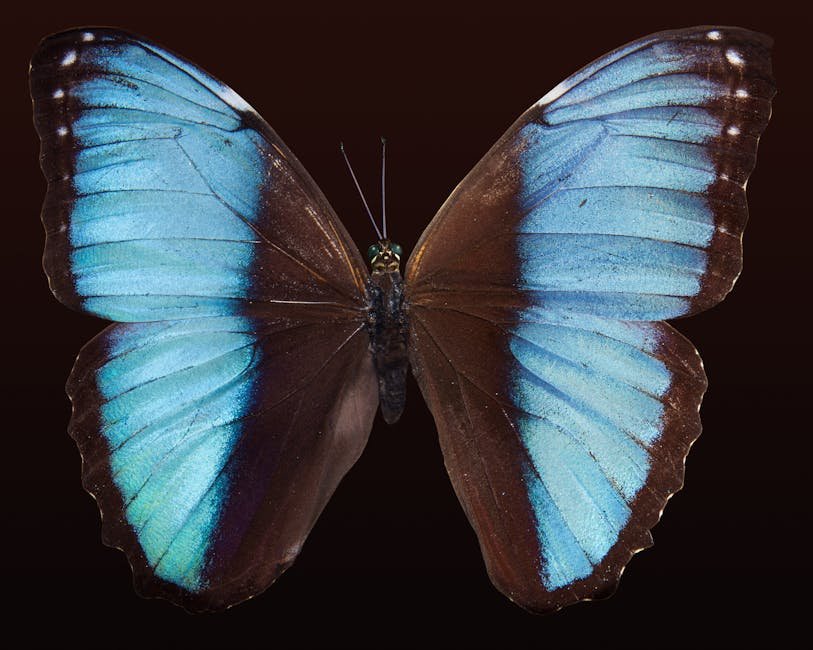
Take the Blue Morpho, probably the most famous blue butterfly around. Their color? It shifts and shimmers. As you move, it’s like a hologram. That’s your first hint, right there. This isn’t just some pigment trick. Nope. It’s straight-up physics. Zoom in on one of their wing scales. You’ll spy tiny, Christmas-tree-shaped ridges. Light hits the top and bounces off. Some light goes deeper. Bouncing off lower bits. For most colors, these light waves hit each other all wrong, canceling out. Poof. No color there.
But blue light? Its wavelength is just perfect. The bouncing waves line up. Make each other stronger. It’s like a hall of mirrors, really. A special one, letting only blue light sneak out. And another thing: some Morphos even got a pigment layer underneath. Totally sucks up stray reds and greens. Makes the blue incredibly vibrant. So, so pure.
Want proof? Okay, maybe don’t try this at home. Leave it to the nerds. Get some alcohol. Fill those microscopic air gaps with it. Poof. Blue? Gone. The light just doesn’t bend right anymore. Broken. That tiny light filter? Toast. But let the alcohol dry OUT. Poof! Amazing blue back.
Waterproof Blue? Yup
These butterflies call the rainforest home. You’d totally think all that rain would mess up their awesome blue, right? Wrong. Their wing scales? Naturally water-repellent. Mind-blowing. Nature literally built a thing that cleans itself. And keeps its color.
Birds Do It Too, But Different
It’s not just California’s butterfly wings, either. Hold a blue jay feather up to the light. Ever done that? It totally loses its color when you backlight it. No blue pigment here. Its individual, bristly bits are jammed with tiny beads. They scatter light. Unlike the Blue Morpho butterfly’s really organized structures, these feather bits are kinda more random, you know? Like foam. Which means the blue stays pretty consistent. From any angle.
Peacock tail feathers? Same deal. Their shiny colors come from the feather’s shape. Not pigment. And these structures? More ordered, like tiny crystals. That’s why peafowl blues are super bright. From certain angles.
Your Blue Eyes? Same Idea
Yep, even your chill blue eyes get that color from structural effects. Not blue pigment. It’s just light scattering around in your iris. The world’s packed with these structural blues too. Everything blue that’s alive? Except the ocean, obviously. They pretty much all make their blues with microscopic bits. Each way? Totally unique.
Why No Blue Dye? Evolution Took the Easy Path
So, why is blue pigment so incredibly rare in nature? Scientists have a pretty good idea why. Ages ago, creatures like birds and butterflies totally evolved to see blue light. But they hadn’t, like, figured out how to make blue dye for themselves yet. Inventing brand-new chemistry for a blue pigment? Phew. That’s impossibly tough to stick into genes.
It was way easier for evolution to just tweak the tiny, existing parts of their bodies. At a microscopic level. To make blue using physics. They literally fixed a biology problem with some smart-ass engineering.
Real Blue Pigment? Super Rare, Total Exception
As far as anyone knows, not one vertebrate (no bird, no mammal, no reptile) makes blue pigment in its actual body. A few unique insects are the exceptions, though. There’s this neat group of ‘olivewings’ butterflies, for example. And they do have true blue pigment. Super unique. Not often seen. A scientific rockstar. But they’re just that. An exception to the rule. Shows how crazy rare blue pigment really is, right?
Humans have been totally hooked by these structural blues for centuries. Robert Hooke, after really looking at a peacock feather way back in the 1600s, called the colors “fantastic.” Even Isaac Newton. He thought about how weird these particular blues were. From the lab coat gang to us just hiking through California nature, the sheer beauty and smarts behind these shy blues keep us wanting to know more.
Quick Q&A
Q: Why’s blue pigment so rare in animals?
A: Making real blue pigment needs super complicated chemistry. Evolution just couldn’t crack it easily. So, most blue animals? They just make their color using tiny structures that mess with light. No pigments needed.
Q: How do Blue Morpho butterflies get their insane blue color?
A: Their wings have these nano-structures. Tiny Christmas trees, basically. And they’re lined up just so. They reflect blue light. And other light waves? They just cancel each other out.
Q: Do birds use this structural coloration for blue feathers?
A: You bet! Blue jays and peacocks? They get their blue colors using structural coloration. Their feathers have tiny beads. Or structures like crystals. All working to scatter light and make that blue effect.