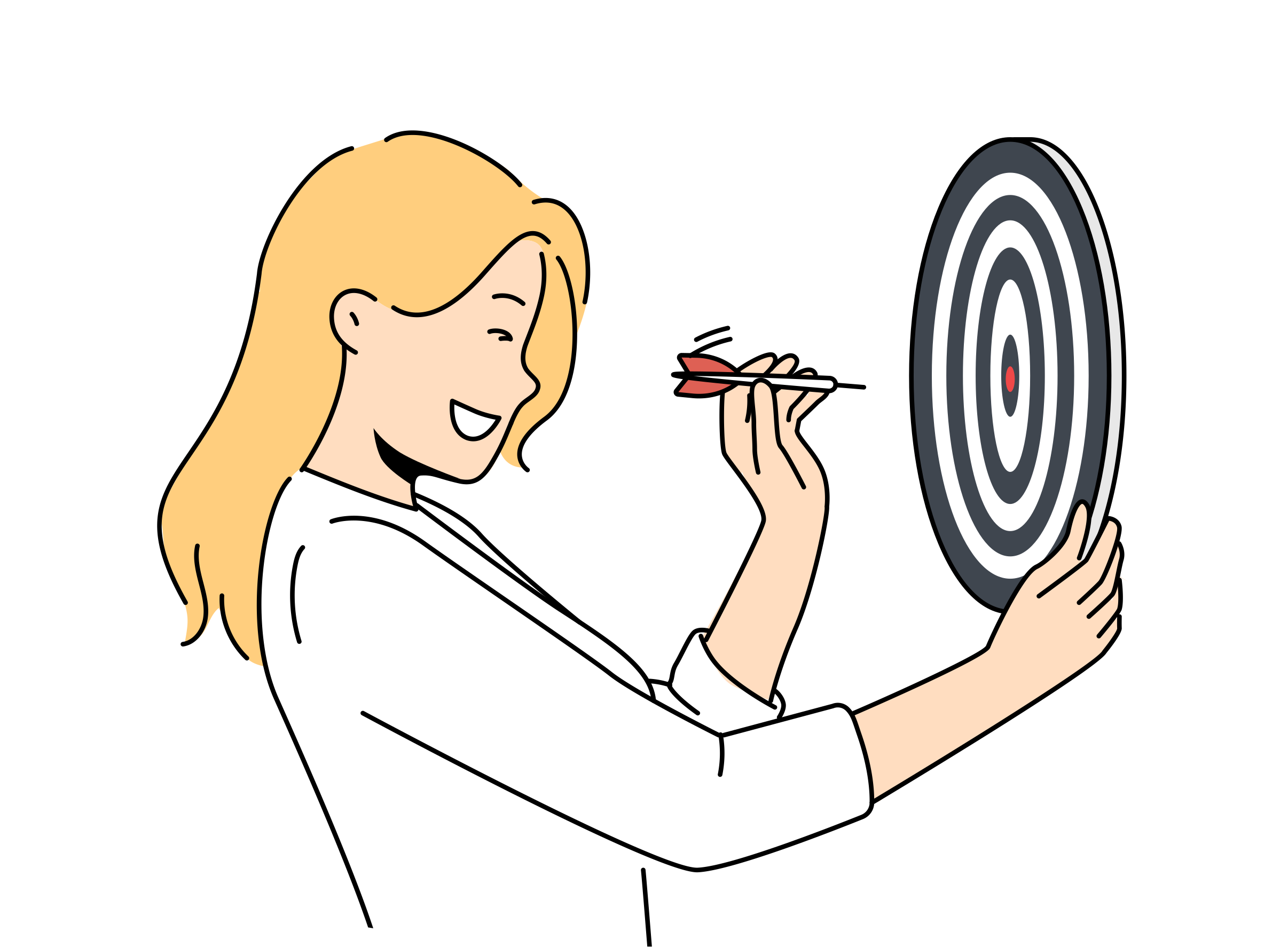
Master Your Mind: Understanding the Self-Motivation Psychology (The Real Talk)
Ever just sit there, staring at your screen? Scrolling endlessly, that thing glaring, just waiting? Yeah, we’ve all been there. Parked on the couch, waiting for some spark. Why do robots just do the task, no questions asked, but for us humans, getting started can feel like a hella uphill battle? It’s not just about willpower. Diving into the Self-Motivation Psychology behind our inner push? That’s a total game-changer.
Complex creatures, we are. Machines just get a command, then do it, then there’s a result. Done. Our inner push, totally different. More dynamic. And figuring out how we work? That’s your first step to really zeroing in.
The Action-Reward-Motivation Loop
Forget straight lines. Loops. Like a never-ending circle. Our cycle: Action. Reward. Motivation. Boom. You do something. You win. That win? Makes you want to go again.
Consider hitting the books for a tough exam. You grind for hours, even when every fiber of your being screams for a chill spot. So much effort. You wrestle with problems, but you stick with it. Then, bam! You ace the test. That high grade? It’s your reward. What happens next? Motivated for the next deadline.
The catch? Backwards, always. We totally get it backward. Many of us wait for motivation to strike before we even move. We just chill, thinking, “Gotta feel good first, then I’ll kick off.” But here’s the real deal: that buzz you get after you do something? That’s what actually fires up new motivation. Action, my friend. First. End of story.
Building Up an Internal Locus of Control
What really gets us going? Okay, get this – some wild study with kids back in ’98. Researchers gave them gnarly puzzles, then clapped for them. First bunch? Told they were “super smart, so talented.” The others? “Man, you worked your butt off.”
Later, given a choice between easy and hard puzzles, the “smart and talented” kids gravitated towards the simple stuff. Not much fun. They didn’t enjoy it much either. Why? Believed success came from something inherited, outside their control. External locus of control. And if it’s just handed to you, why even try harder?
So, the “hardworking” crew? They went for the tough ones, way happier at it. Showed they had an internal locus of control. They got it: their hustle led straight to their wins. This idea – that what you do totally matters? Epic power right there.
To truly light your own fire, you gotta fight that voice inside blaming everything else. Even if stuff feels totally outta your hands, try to look at it differently. What can you get a grip on? What kind of effort can you throw in? Seriously, it’s just like lifting weights for your Self-Motivation Psychology muscles.
The Overjustification Effect: When Rewards Backfire
Sometimes, motivation isn’t just about a treat for good behavior. Totally not. Two main tastes: intrinsic and extrinsic. Intrinsic? That’s when you do stuff just ’cause it feels good. Play a game? Awesome. The doing is the reward. Extrinsic motivation? That’s chasing an outside prize – like years of training just for Olympic gold.
You might think, “Why not have both?” But surprisingly, mixing them can sometimes backfire. This is the Overjustification Effect.
Imagine: Painting, your absolute jam. Your happy zone. You start handing out your art to pals, they go nuts for it. Then, a wild idea. Someone whispers, “Sell ’em!” You’re like, “Sweet! Love painting, cash too!” But as the orders pile up, that pure fun? Poof. Gone. Now you’re painting for sales, not for kicks. That money, an outside reward, quietly sucks the joy right out.
You gotta figure out the sweet spot, know exactly when and where to bust out different motivation moves. Seriously important.
Dopamine: Your Brain’s Motivation Fuel
Let’s face it. We ain’t robots, okay? Can’t just crank out tasks indefinitely. Our ancestors, they had to save energy. This whole ingrained thing, mixed up with our brain’s chemistry, totally shapes our drive. Big shot in this arena? Dopamine.
It’s the brain’s reward molecule. Knowing how it moves is super important. Crazy, right? Ever hear about Parkinson’s patients on dopamine meds getting hooked on gambling? Nope, not random. Gambling machines are made to mess with your dopamine: boom, little win, flash, flash, promise, promise. That little hit of reward? Drives you to play again. Cycle never ends.
So, how often should you hit yourself with a reward? That’s all you. If you’re always staring at some massive, way-off prize, it might just fizzle out. Break stuff down. You gotta figure out your unique dopamine triggers, then make your own freakin’ Self-Motivation Psychology battle plan.
Action First, Motivation Follows
Hear this again. Crucial stuff. It’s the line between dreamers and actual doers. Waiting for that ‘aha!’ moment? Total trap. You don’t get ripped by waiting to feel like pounding out a marathon, do you? No. You tie your shoes. Go out there. That sweet feeling of moving, of getting somewhere? That’s what makes you want to run again.
Don’t wait. Start. Even a tiny step breaks the inertia.
Why One-Size-Fits-None in Motivation
Yo, listen up. There isn’t some miracle motivation pill that just clicks for everybody. Nope. We’re all totally different, right? Different life stories, different vibes, different aims. What gets one person fired up? Could put another to sleep. Music to focus for one? Pure noise for someone else.
So yeah, the big picture Self-Motivation Psychology stuff gives us a map, but the details? That’s all on you. You gotta be your own lab coat wearer, trying out what makes your inner motor kick. Think about what genuinely makes you happy, really locked in. And another thing: Sometimes, it’s just a few nice words from someone you care about that can make even the boring chores seem, like, remotely okay. Human stuff, you know?
## Frequently Asked Questions
Q: So, what’s frankly the big difference between how a human gets going versus a robot?
A: Robots just follow a command chain, action-result, no questions. Easy. But humans? We’re on an Action-Reward-Motivation loop. And yeah, that’s messed with by all our tricky internal stuff and just how we see things.
Q: Hey, can outside rewards make you less into doing something you already like?
A: Yup. It’s the Overjustification Effect. You throw an outside reward – like cash – at something you honestly love doing, and weirdly, it can slowly suck the pure joy and your own drive right out of it. Over time.
Q: Why’s this “locus of control” thing a big deal for staying motivated?
A: Building up an internal locus of control – meaning, believing your hustle and your moves directly shape what happens – that’s super important. It builds strength and keeps your motivation engine running because you feel in charge, you own your wins, instead of constantly blaming outside junk you can’t control.