Mauna Kea Travel Guide: Summit Hawaii’s Tallest Peak & Stargaze from the Big Island
Everest? World’s tallest? Nah. Think again. Sure, it’s got the highest peak above sea level. But deep in the Pacific, on Hawaii’s Big Island? That’s where you find Mauna Kea. A massive shield volcano actually. It stretches over 10,200 meters from its very bottom on the ocean floor, right up to its summit. Massive. Planning a trip to this sacred, science-y spot? You’ll need a good Mauna Kea travel guide. Seriously, the stargazing up there? Hella good.
Mauna Kea is technically the world’s tallest mountain (over 10,200 meters from base to peak) and one of the most imposing topographic features on Earth
So, ditch whatever you thought about mountain measuring. Really. When you look at it base to peak, Mauna Kea just swallows Everest. Most of this monster, over 60%, is hiding underwater. Its true size? Mind-boggling. And it’s not just big for our planet, you know. This peak is actually one of the biggest in the entire solar system.
Pretty young for a volcano, Mauna Kea is. Just a million years. It’s sleeping now, a dormant giant. Last moved eons ago. But its deeper slumber? Not forever. And its twin sister, Mauna Loa, totally awake. Erupting lava late 2022 and early 2023! Mauna Loa actually keeps growing. And another thing: lots of folks think it’ll eventually get taller than Mauna Kea. Just a matter of time.
The ascent to Mauna Kea’s summit requires strategic acclimatization stops due to significantly reduced oxygen levels and extreme temperature drops
Getting to the top of Mauna Kea? Not a race, buddy. Seriously, air’s thin. Oxygen levels drop to about 60% of what you get at sea level. Demands respect. You have to stop halfway up. Usually about 45 minutes. Just let your body get used to it.
Temps totally drop, by the way. It could be a nice 28°C at sea level. But the summit? Often below 0°C. Snow and ice? Not a surprise. And dizziness? Super real. So take it slow. Listen to your body. Seriously. This ascent is kinda unique, though. Not many high mountains are so easy to get to by car. A big bonus. All thanks to those observatories.
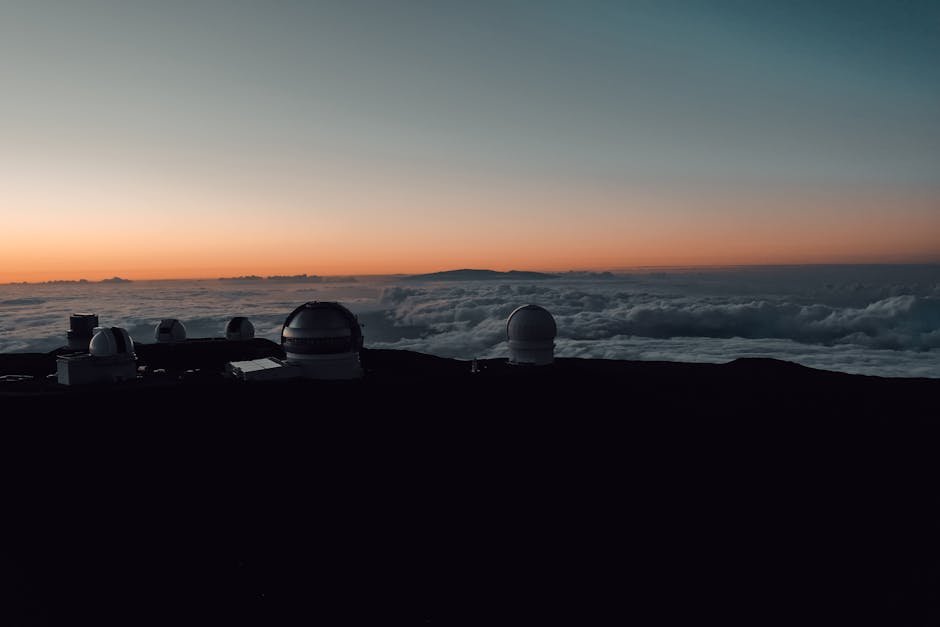
The summit hosts 13 international astronomical observatories, making it a world-renowned destination for stargazing and scientific research due to its dry air, high altitude, and minimal light and air pollution
Sitting way above the clouds, Mauna Kea is an astronomer’s actual paradise. Dry air. Crazy high altitude. Almost no light or air pollution. Creates a perfect window to the cosmos, you know? That’s why 13 big observatories, from 11 different nations, are all gathered up there.
And these aren’t just any telescopes. Like the Keck telescopes, at one point the world’s biggest. And Japan’s Subaru scope. Even NASA’s Infrared Telescope—the one people sometimes blame for Pluto losing its planet status—it’s here. Big discoveries, you know? Stuff that led to Nobel Prizes, like the 2011 Physics one for measuring cosmic expansion, happened right in this “Astronomy Precinct.” Super important: No flying over the mountain. Gotta keep it perfect for the viewing.
Mauna Kea holds deep cultural and religious significance for Native Hawaiians as a sacred dwelling place for the goddess Poli’ahu, necessitating respectful visitor conduct
Cool science stuff aside, Mauna Kea is a really sacred place for Native Hawaiians. It’s where the goddess Poli’ahu lives, you know? She’s about snow and ice. Back in the day, only Hawaiian kings, chiefs, and special priests could even go up there.
Visitors? Gotta be super respectful. This deep meaning influences all the ongoing talks about the mountain’s future, too. Because locals? They fiercely protect their cultural past. It’s important.
The mountain exhibits dramatic ecological diversity, transitioning from rainforests at its base to arid savanna-like regions and eventually snow-capped areas near the summit
Going up Mauna Kea? It’s like a trip through a bunch of mini-worlds. You start in lush rainforests at the bottom. But then the view quickly changes to tropical plants. Climb a bit more? It turns into these dry, savanna-like stretches. And higher yet, it gets desert-y. A total flip from the snow and ice found right at the very top. Just shows how massive this mountain is. And all its various elevations.
The ‘Apollo Valley’ on Mauna Kea served as a testing ground for Apollo astronauts preparing for lunar missions and continues to be used for lunar rover simulations due to its moon-like surface
Apollo astronauts? Before rocketing to the moon, they tested all their stuff, even themselves, in a special spot on Mauna Kea known as the Apollo Valley. It was perfect. Rocky, desolate. Seriously like the moon. And another thing: today, this special area still does important work. Simulating lunar rover prototypes and other space vehicles. One of only a handful of places on Earth that really, truly feels just like the moon.
Ongoing political discussions surround the construction of new telescopes on Mauna Kea, balancing scientific advancement with indigenous cultural preservation efforts
So, scientific progress versus sacred land. It’s a real conflict. They’d kinda agreed: 13 observatories, max. But then popped up plans for a 14th telescope, the massive 30-meter Thirty Meter Telescope. Huge controversy broke out. Groups like the “Guardians of the Mountain” put on some serious protests. Seriously. At one point, 6,000 people showed up, blocking access and totally stopping construction.
And those political arguments? Still going strong. Astronomers want more discoveries. Native Hawaiians though? They’re all about protecting their sacred land. The latest idea involves taking down two older telescopes first. Keep the 13-observatory limit, you know? Then they can build the new, much bigger instrument. It’s a tricky balance of respect and moving science forward.
Experiencing sunset above the clouds and stargazing from Mauna Kea’s summit offers a profoundly meditative and unforgettable perspective on the universe
So, when the sun dips below the horizon up there? Happens nine minutes later than at sea level. The whole thing? Breathtaking. Below you, clouds stretch out. An endless ocean, all bathed in fiery colors. Sometimes, if it’s partly cloudy, it just makes the whole thing even crazier. Impossible colors painting the sky.
Then comes the dark. And with it? The entire universe. Your eyes need about 15-20 minutes to adjust to the low light up there, but then? Boom! Stars burst out. Seriously clear. Planets shimmer. Satellites, even the International Space Station, just glide silently overhead. Looking into all that profound darkness, standing right on the summit of the world’s tallest mountain? It’s not just observation, you know. It’s a deep, meditative experience. Connects you to something much, much bigger than yourself. A real soul moment.
Frequently Asked Questions
Is Mauna Kea the tallest mountain in the world?
Yes, technically. Sure, Everest’s peak is highest above sea level (8,848 meters). But Mauna Kea goes over 10,200 meters, bottom of the ocean to top. Tallest from base to peak. No contest.
Why are there so many telescopes on Mauna Kea?
So, Mauna Kea has super clear views for space research. High altitude, dry air, barely any light or air pollution. Makes a perfect “window” to outer space. Draws observatories from 11 countries.
What is the cultural significance of Mauna Kea for Native Hawaiians?
Native Hawaiians see Mauna Kea as a sacred place. Where Poli’ahu, the goddess, lives. So, it’s super important to their religion and culture. Visitors MUST be respectful. Sparking lots of talks about what to do with the land. And keeping it safe.