Serial Killer Psychology: Why We’re So Hooked (and What’s Up With Their Brains)
Why are we so into the super dark stuff about people? Down here in California, we’ve got our share of creepy true crime, and the draw of serial killer psychology is hella real. Media just eats it up, spitting out docs and dramas that hit a weird spot. We make these charming, made-up villains – like Hannibal Lecter – who just make us more curious. But what’s actually happening inside these people’s heads? It’s a question that keeps us awake, making us wonder. You know, if that person next door could be just as messed up.
And here’s the thing about our obsession: it comes with a weird guilt. Someone’s pain, their family ripped apart, gets turned into a snack-and-binge session. These monsters sometimes get romanticized on screen. Big red flag, honestly. Makes you think something truly ain’t right.
Serial Killers: No Cookie-Cutter Evil Here
Forget the idea of a single type of serial killer. No way. Scott Bonn’s work spells it out: at least three victims, killed at different times and spots, with a “cooling-off” period. That’s what sets them apart from other dangerous folks.
Mass murderers, for instance, kill a bunch of people all at once, usually hitting specific places like a school. Often, they end up dead themselves or by cops. Think Columbine, just awful. Spree killers are somewhat similar to serial killers, killing quickly and intensely across various spots. But they don’t take a break. Just on one continuous, violent rampage.
Then we’ve got hitmen. They kill for cash. A cold job, totally professional, no fun or feelings involved. But a serial killer? They pick their victims, driven by some twisted internal need, usually getting a perverse thrill from the act. This difference is key inside their head. Personal gratification, that’s it.
Criminal Profiling: The FBI’s Best Bet (and Why It’s Not Perfect)
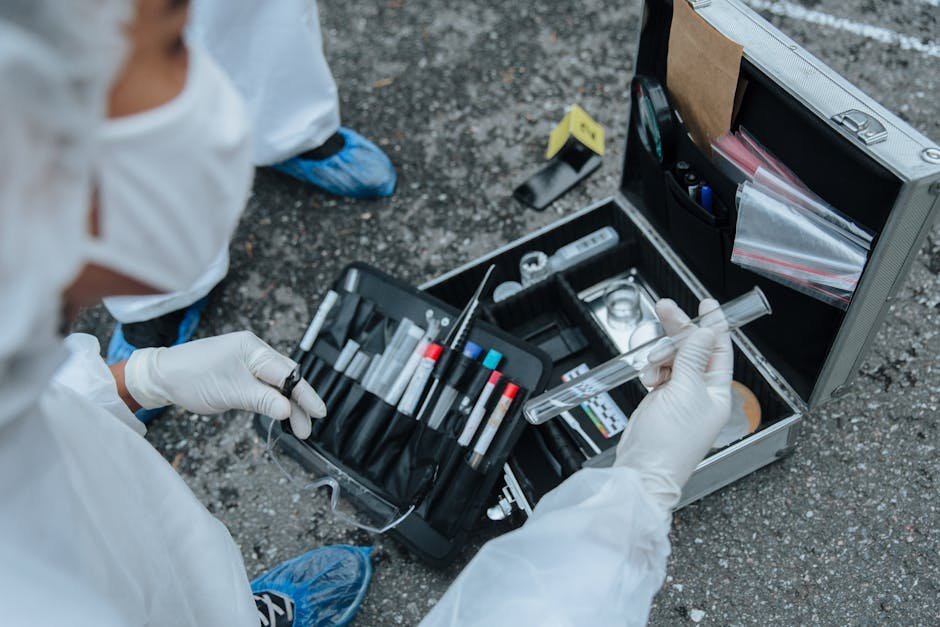
So, how do you catch a total phantom? Law enforcement, especially the FBI, uses criminal profiling. It’s about putting together little bits of info to build a sketch of the unknown bad guy – their age, gender, race, motives, personality, whatever. Back in the 1800s, doctors were the first to try this, like figuring out London’s Jack the Ripper was one dude from autopsies. The 70s and 80s were huge for this work. Cases screaming for quick answers.
Profilers generally ask four core questions: What drove the killer? How’d they do it? What happened to the body? And what did they do after the fact?
This leads to a six-step process, starting with all the evidence and talking to witnesses. Next, figuring out the killer’s brain: why this person, why this weird way of killing? Then, the big question: organized or disorganized?
Organized killers are super careful. They leave barely any clues, clean up mess, wipe prints. These folks often have smarts, good people skills, education, and charm. Ted Bundy was like that, hiding bodies and dodging detection like a pro. Disorganized killers, on the other hand, just act. Messy scenes. Low intelligence often. Acting out of sudden anger. Jack the Ripper, leaving bodies where they dropped, fits this type. This system isn’t perfect. But it has helped crack countless cases.
Why The Freak Out? Peeling Back Our Darker Urges
Our weird interest in serial killers isn’t just a morbid curiosity, oh no. Noel Carroll, who wrote The Philosophy of Horror, says it’s because we’re naturally drawn to “monsters” – things that combine two opposites, like zombies or human-wolves. Serial killers? Our real-world monsters. Just unsettling fusions of person and predator.
Also, there’s an evolutionary thing. Imagine a zebra watching a lion. It’s not looking for trouble. It’s learning the predator’s moves to survive later. And we’re kinda like that, wired to soak up info about really dangerous people around us. A strange kind of self-preservation. Watching a true-crime doc gives you that controlled scare, like seeing a wild animal safe behind glass at the zoo. High stakes. We aren’t in danger. That distance lets us face the scary stuff without the real-deal horror.
And we’ve got this huge inner need to solve puzzles. To figure out why people do extreme things. Take Aileen Wuornos, for example. Learning about her rough past and what sparked her violent spree, yeah, that just scratches an itch to decode the human mind. Sometimes, this “fixer” vibe makes women get dangerously attached to killers, thinking they can, like, “change” them. This often comes from their own self-esteem woes. Maybe even unresolved daddy issues. And another thing: all that raw power from these killers? Can get mistaken for super intense masculinity, attracting those looking for protection.
But deeper down, our interest in these people makes us stare right into our own dark psychology. We all have impulses and thoughts we squash down, a shadow side we barely acknowledge. Serial killers? They just do those urges. Makes them terrifying mirrors of what humanity is capable of. And what we might fear finding in ourselves.
Killing the Myths: All the Wrong Ideas About Serial Killers
Ask anyone what they think about serial killers, and you’ll get a whole list of common beliefs. Most of them? Total bunk.
First, the “all male” myth. While guys are the majority, about 17% of serial killers in the U.S. are women. And get this: the percentage of female serial killers is actually higher than their number in general murder rates. Women often use less messy, quicker ways – Aileen Wuornos, for instance, used a gun, not torture, on her male victims. She felt it was payback for her own abuse.
Then there’s the “all white” delusion. Media often spotlights white killers, sure, but roughly 20% of serial killers are Black. Most serial killer victims, actually, are the same race as their killer. Cases like Jeffrey Dahmer, whose victims were mostly Black, often mess with how the public sees things.
Another big one: “isolated loners.” Many serial killers aren’t some creepy shut-in. They can be incredibly charming. Have families, jobs, and be liked in their neighborhoods. Dennis Rader, the BTK killer? Married for 34 years, two kids, worked for the government, and respected at his church. A pillar of the community, truly. Not a weirdo.
And “all serial killers roam like nomads”? That’s mostly thanks to Ted Bundy. He famously crossed state lines. Used those communication gaps between police. But here’s the kicker: Bundy was the exception. Most serial killers have a “comfort zone” – a certain neighborhood or even their apartment, like Jeffrey Dahmer – where they do their horrible stuff.
The “evil genius or insane” trope? Pure bunk. The average IQ of a serial killer is, well, pretty normal. Sometimes, cases stay cold for ages not because the killer is brilliant, but because cops screw up. Dahmer’s neighbors, for example, kept reporting weird odors and behavior, but police just blew it off. Most serial killers fully know their actions are wrong. So, not legally insane. David Berkowitz, the “Son of Sam,” tried to say demons made him do it. But nope, psych exams found him perfectly sane.
What about “they can’t stop once they start”? Well, some do kill until caught. But others just stop. Dennis Rader paused his murders for over ten years because he found other ways to get off. Jack the Ripper and the Zodiac Killer also had active periods then just went quiet.
And no, they don’t deep down “want to get caught.” That’s Hollywood. Serial killers like Jeffrey Dahmer and Joel Rifkin have admitted their first murder was the hardest because of intense fear of getting nabbed. With each next kill, they get more precise, better at hiding tracks, and cutting down their chances of arrest.
Finally, “all victims are women”? Not completely. About 70% of serial killer victims are women. This shows many killers are straight, with sexual motives. But some, like John Wayne Gacy and Jeffrey Dahmer, went after men with homosexual motives.
Psychopathy: The Scary Core of Many of These Crimes
A big chunk of what we call serial killer psychology boils down to psychopathy. We’re talking people who totally lack empathy, are master manipulators, have this weird social charm, and are completely fearless. No remorse. They’re often the “organized” kind of killer, meticulously plotting their crimes. Makes them super tough for cops to nail down.
A psychopath is a master of disguise. Their social skills are next-level, letting them fit in anywhere – cafes, bars, big meetings – all while spotting their next target. You might get a faint, unsettling gut feeling from them. Something in their eyes, how they act. But their charm is so strong, it often shuts that feeling right down.
Their fearlessness? Terrifying. They don’t sweat arrest, jail, or even dying. No remorse. No pity for who they hurt. This means they push boundaries “normal” people wouldn’t even think about. So, psychopathy exists on a spectrum. These killers are way out on the far, dark end. Their victims, often? Totally opposite. Highly empathetic, super emotional, feeling fear and sadness deeply.
For a psychopathic serial killer, a victim is simply an object. A means to an end. Their feelings, their families, even their basic right to live mean absolutely nothing. Ted Bundy, the ultimate psychopath, once said he actually worked to dehumanize his female victims. Forced himself to see them as things, not people. Just helped him do what he did. That mindset, chillingly, is their whole plan.
The Many Faces of Evil: Why They Kill
While lots of serial killers have psychopathic traits, their reasons can vary hugely. Leads to totally different kinds of evil.
First up, you have the Visionary Killers. These are the truly disturbed ones, hearing voices, seeing things, having psychosis. They believe “God” or “the Devil” told them to act. Herbert Mullin is a classic example; he swore a divine voice commanded him to kill people to stop an earthquake. Not faking; diagnosed paranoid schizophrenic. Heavy drug addiction. Definitely disorganized.
Next come Mission-Oriented Killers. They think they’re improving the world by getting rid of a specific group – maybe a certain race, religion, or political type. They see their crimes as a good thing, acting cold and professional, usually super organized. Joseph Franklin, a Ku Klux Klan member, murdered Black people, convinced he was “saving white women.” Basically, fixing a “sin against nature.”
Lust Killers stretch out the act for maximum sick pleasure. Often involves sex with victims, both alive and dead (yep, necrophilia). Sadism, torture, and intense pre-crime fantasies often drive their methods. Jeffrey Dahmer, a notorious lust killer, saw killing as “a means.” His ultimate goal? Control. He even admitted the actual kill was the least satisfying part. Drove him to try and make “living zombies” out of his victims.
Gain Killers only operate for money. Kinda like professional hitmen, but with one big difference: they pick their own targets. They see killing as a path to wealth or a better lifestyle. This type can be organized or disorganized, just depends on their routine. From a coordinated gang robbing and murdering small towns to one person poisoning rich folks for an inheritance.
Then there are Excitement Killers. These people just love every single part of the murder process: picking, stalking, tricking, and finally killing their victims. It’s a game to them. They constantly want to play it again and again, often upping the ante by taking insane risks to boost their thrill. The infamous Zodiac Killer, who sent those taunting letters to the press, openly bragged about how “fun” killing people was. Said it was “more exciting than hunting wild game.” Even “better than getting your rocks off with a woman.”
Finally, we have Power/Control Killers. Their main thing is having absolute control over their victims, especially when they’re still alive. They often use long torture sessions, not just to cause pain, but to get total dominance before the person dies. Dennis Rader, the BTK killer, was a classic power/control killer. Tying, torturing, and killing his victims, getting huge pleasure from the agony he put them through before they finally went.
Media’s Role: Making a Spectacle Out of Horror
The media, with all its documentaries, movies, and shows, plays a huge part in how we get (or totally misunderstand) these figures. They often call serial killers “monsters.” Which is chillingly true. But it also just feeds that primal curiosity we talked about. This endless stream of content, often hyped up or romanticized, keeps the fascination alive. Even if it leaves us feeling a bit guilty about loving these dark stories so much. It’s a messy, wild mix. Keeps us all on edge, wondering about the stuff we just can’t unsee. Or un-know.
Frequently Asked Questions
Are all serial killers genius-level smart or just plain nuts?
No way. The idea that all serial killers are criminal masterminds or clinically insane? Pretty much a myth. Their average IQ is just regular. Many know exactly what they’re doing and the legal consequences. So, no insanity defense for them. Catching some can be tough, sure. But that’s usually more about cops making mistakes or tough investigations. Not because the killer is some super genius.
Do serial killers always have a terrible past or mental illness?
Childhood trauma, abuse, and antisocial personality disorder (like psychopathy)? Yeah, they’re common. But it isn’t a hard and fast rule for everyone. Some serial killers come from pretty normal backgrounds. No obvious history of major illness or trauma. Psychopathy, marked by zero empathy and being manipulative, is a key piece of the puzzle. But not all of them show things like psychosis, which is a traditional mental illness.
Do serial killers actually want to get caught?
No way. That’s a common movie trope. In real life, serial killers usually get more careful, better at hiding their tracks with each murder. The fear of getting busted is often highest during their first offenses. They actively work to avoid detection. They see arrest as a huge buzzkill for their activities. Some might even quit killing if they feel the risk of getting caught is too high.