Driving the Legend: How the Toyota Supra Defined California’s Car Culture
Ever wonder why that car claiming just 280 horsepower had parts built for a thousand? Crazy, right? That wasn’t some sales trick, nah. It was actually one of Japan’s biggest automotive “white lies”—and it totally kickstarted a legend. One that still defines California Car Culture. This wasn’t just some slapped-together design. Engineers, seriously obsessed with beating Ferrari, even made carpet fibers thinner. They called it ‘Will Power.’ A crazy drive for performance. And it shaped the Supra’s wild legacy. Gave it a unique vibe for gearheads ready to really push it.
The 2JZ-GTE Engine: A Tuner’s Dream
Toyota totally underplayed the power. Seriously. The 3.0-liter inline-six 2JZ-GTE engine from the factory? Stronger than they let on. Officially, yeah, around 320 horsepower. That was for some “gentleman’s agreement” in Japan. But the engineering? Man, that told a whole different story.
This wasn’t just good design. It was extreme over-engineering. Toyota’s guys built the cast-iron block, forged internal guts, and six-bolt main bearings to take upwards of 1000 horsepower. Essentially? They sold you a blank canvas. Crammed with potential. Just waiting to go nuts.
Mated to that beast was the Getrag V160 six-speed manual transmission. Always revered as one of the toughest transmissions in a production car. And that old “crank walk” thing? Technical experts pretty much agree it’s way overblown. It wasn’t the engine itself. Usually it was just super stiff aftermarket clutches messing up the crank bearings. Because the Supra engine? Hella tough.
Cementing Icon Status: Fast & Furious and the Golden State
Can’t talk about the A80 Supra without also talking about the 2001 film The Fast & The Furious. That bright orange “candy-colored” Supra, fixed up by Paul Walker’s character? Not just some prop, dude. It became a straight-up symbol of turning things around. And hope.
The film launched the car right into global superstardom, especially out here in the Golden State, turning it into the image of street racing and car modification. Also, it gave us that meme: the shocked “Is that a Supra?” look when one rolls by. This wasn’t just a movie piece. It was a cultural phenomenon.
The ‘Will Power’ Project: Relentless Pursuit of Performance
Toyota was in a bit of a pickle back in the early 90s. The last Supra had gotten heavy. Too complicated. It was a grand tourer, not like the quick stuff, the Nissan GTR or Mazda RX7, which were owning the market. Project chief engineer Nisa Suzuki had one bold, simple aim: better power-to-weight than the GTR. Even better than the Ferrari 348.
So, they kicked off the “Will Power” campaign. Suzuki and his team met over 950 times in two years. Think about that. Sometimes three times a day. All of it just to shave weight. They dumped the dual exhaust. That telescopic steering? Gone for good. Engineers even trimmed carpet fibers and hollowed out sway bars. This was way more than just an engineering thing. Pure obsession.
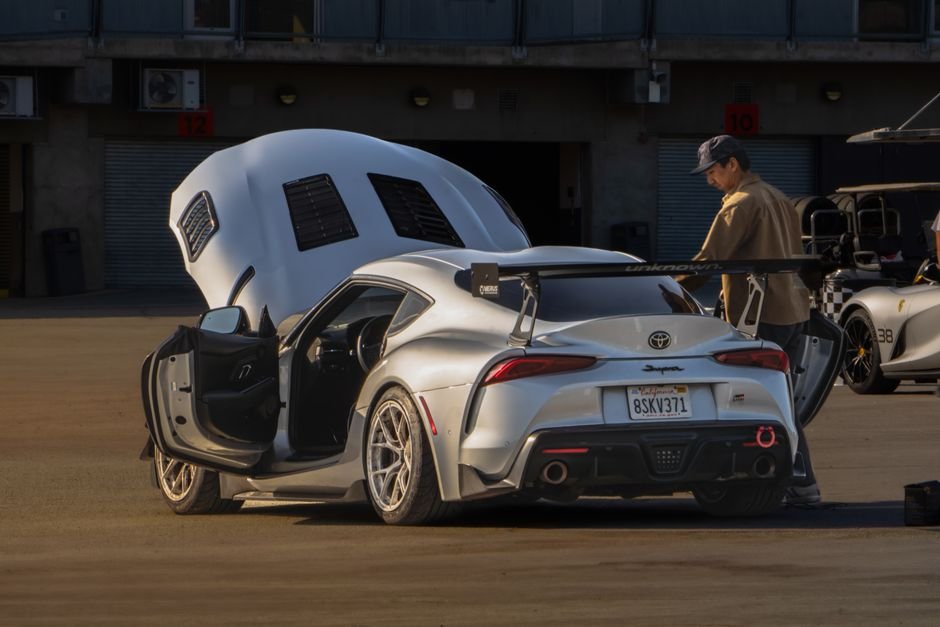
The chassis, super light from all that work, combined with the brawny 2JZ engine, created a pure, rear-wheel-drive machine. Made for racers. A tuner’s true dream. And the ultimate platform for power.
Global Legend: From European Speed Runs to California’s Heritage
The Supra’s legend didn’t just stay in Japan. And another thing: in 1998, Kazuhiko “Smokey” Nagata, who started Top Secret, took his 1000-horsepower Supra to a UK motorway. What for? To secretly break a speed record. He hit 317 km/h (197 mph). Got caught though. Arrested, then banned from the country. So, the Supra became an international speed icon after that. Total legend.
While stories like how hard it was to get one in places like Turkey—where even just a Supra shell, no engine, cost millions in taxes—show its specialness, this worldwide mystique only boosted its appeal. International visitors often make big trips to Southern California. Drawn to our amazing car background. And the deep list of legendary JDM rides, with the Supra leading the pack, obviously. It’s truly a car that loves driving. Universal appeal.
A Bygone Era: The A80 Supra’s End and Enduring Legacy
Production of the A80 Supra in the United States ended in 1998. Not because sales were bad, either. No, Toyota just didn’t want to shell out for the expensive tweaks needed to hit the ever-stricter American safety and emission rules. It was a casualty of changing laws. Not some flop.
This decision made the A80 Supra a monument to an old-school era. A time when raw performance wasn’t choked by a bunch of rules. Today, it’s still a super sought-after car. It truly shows that past time of pure, wild performance cars. For collectors and enthusiasts all across California, it’s more than just a car. It’s a piece of automotive history. Proof of pushing limits. And building a machine that just won’t quit.
Frequently Asked Questions
Why did Toyota build the 2JZ-GTE engine to handle so much power if they claimed it only made 280hp?
Toyota simply understated the engine’s real muscles. Due to a “gentleman’s agreement” among Japanese automakers, they wouldn’t officially list over 280 horsepower. But engineers still crafted the 2JZ-GTE with super tough stuff. Built for way more. Perfect for tuners, really.
What was the “Will Power” project for the Supra?
“Will Power” was this crazy intense weight-reduction plan. Supra engineers, led by Nisa Suzuki, went all out. They met hundreds of times. Shaving off every gram possible—from ditching dual exhaust systems to even thinning carpet fibers. All to get a better power-to-weight ratio than rivals like the Nissan GTR and Ferrari.
Why was the A80 Supra discontinued in the US in 1998?
The A80 Supra got axed in the US, but not because nobody wanted it. Mainly because Toyota just decided against throwing big money at expensive changes. Changes needed to meet tougher American safety and emission rules. So, it became a victim of policy, not bad sales. Solidifying its standing as a highly wanted and pure performance classic.