Ancient Alien Theories: Anunnaki, Lost Civilizations, and Religious Secrets
You ever just stare at the stars, far from city lights, and wonder, “Are we really alone outta here?” Or maybe, just maybe, everything we’ve been told about history is, like, a twisted version of the real deal? We’re talking Ancient Alien Theories. The kind that make you question every stone pyramid. Every sacred text. Nope, not just tinfoil hat stuff anymore. People are really digging into ancient Sumerian tablets and world myths. Wild connections are surfacing.
Alien Influence: Architects of Civilization?
Think about Mesopotamia. The start of it all. Suddenly, writing, crazy advanced math, astronomy, even the first hospitals? Boom. Sumerians just showed up. Fully formed. Their systems still baffle historians today. Pure human smarts, lightning fast? Or an outside spark? Some kind of nudge?
Old texts, like the Epic of Atrahasis, mention the Anunnaki. Literally “those who from heaven came.” Or “royal offspring.” These weren’t just made-up ghosts. They’re often described as flesh-and-blood. Bigger, stronger, way more advanced than early humans though. They needed places to live. Food to eat. Kinda sounds like an earthly reality. Despite being called “divine.”
Other accounts suggest a lower group, the Igigi, worked for the Anunnaki. Built temples. Dug for resources. When the Igigi got fed up with the grind (the very first job protest, maybe?), Enki, an Anunnaki bigwig, and goddess Ninmah, came up with a plan: humans. We were cooked up from clay and “the blood of the gods.” Made to labor. Adapa, the first guy, learned agriculture, science, laws right from Enki himself. Our job? Just serve. That’s kinda different from the “gods made us special” story, huh?
And gold? The Anunnaki absolutely loved it. Some folks think they needed it for their planet’s atmosphere (no direct proof for that in ancient writings). But, metal was clearly important. Pharaohs in Egypt had gold dust. Greek gods chilled in golden palaces. It’s always linked to the divine. Coincidence it’s super important for all our tech now? Might not be a coincidence at all.
Religious Parallels: Same Starting Point?
The Sumerian flood story, way older than anything in the Bible, is bonkers. The Anunnaki council. Annoyed by noisy, disobedient humans. So, they decided: wipe ’em out. But Enki, always a bit of a rebel, warned a favorite human, Ziusudra (or Utnapishtim, depending on the version). Build a boat. Sound familiar? Almost every culture has a flood myth. Human arrogance, gods getting mad, a chosen few surviving in a big boat, a fresh start.
Think creation stories: Sumerian tales describe primordial waters. Then a giant mountain splitting into sky and earth. Plants, animals. Then the Anunnaki. This echoes Genesis. Spirit over water. Water separated. Dry land. Life. Then humanity made. Even the six-day creation thing. It lines up strikingly with Sumerian tablets outlining six distinct stages.
The God figure in the Torah acts, well, kinda human sometimes. He gets angry. Regrets things. Changes his mind. Some say this is an attempt to squish the different vibes of Enlil (the destroyer guy) and Enki (the protector) into one deity. Even “Elohim” in Hebrew. Often translated as “God.” It’s plural. “Powerful shining ones.” Not just one almighty creator. The origins of words. Goes deep. And another thing: these connections run hella deep.
Sacrifices, originally actual gifts to feed the Anunnaki, shifted. They became symbolic worship after these “gods” took off. Ziggurats, where the Anunnaki lived on Earth, turned into temples, churches, mosques. Places for humans to reach out to gods who weren’t there anymore. “Sin” and “reward” directly mirror Sumerian beliefs. Please the “gods.” Avoid destruction. Like Enlil wiping out Ur.
Advanced Ancient Technology: War Traces
Ever hear about Mohenjo-Daro? In the Indus Valley? Archaeologists found this huge old city. Not many skeletons, though. Only 43. Dead in weird poses. And get this: vitrified pottery. Melted rocks. Traces of radiation. Geologists say some stuff got hit with temps between 3,000 and 4,000 degrees Fahrenheit. No volcanoes around. Nope.
Ancient Indian epics, like the Mahabharata, talk about “wars of the gods.” A devastating weapon: Brahmasta. It glowed brighter than “dozens of suns.” People incinerated. Survivors lost their hair. Brittle nails. Instant aging. Sounds exactly like a nuclear blast. Was Mohenjo-Daro ground zero for an old atomic war? A fight between super-advanced “gods” way back? The proof makes you wonder if these weren’t just myths. Actual stories of forgotton tech. Used for hella destructive things.
Reinterpreting Nibiru: Passage, Not Planet?
Zecharia Sitchin made Nibiru famous. The Anunnaki’s “home planet.” A rogue world. Every so often, it swings into our solar system. But ancient Sumerian records kinda describe “Nibiru” as a “passage” or “crossing point.” Not a whole planet you can live on. The planet Sitchin linked to Nibiru in popular culture is actually called Marduk. In ancient Babylonian texts. Like the Enuma Elish.
This epic describes our solar system forming. Planets born from cosmic chaos. Then Marduk (Sitchin’s Nibiru figure) shows up. A massive planet-god. Fights Tiamat, a “super-Earth” in our asteroid belt region. Marduk wins. Splits Tiamat’s body. Earth forms. And the heavens. This kinda sounds like modern science. The Theia Impact, for instance. A Mars-sized object hit early Earth. Or the Late Heavy Bombardment. So, the search for “Planet X” or “Planet 9″—a huge, unseen thing messing with distant orbits—gives these old stories weird credibility. Either ancient people had amazing astronomy skills. Or they got “divine” lessons.
But life on a giant, distant planet like “Marduk”? Scientists call that a tough sell. Super cold out there. Immense pressure. Advanced life is basically impossible. So if Nibiru isn’t a planet, a “crossing point” might make more sense. Lines up with ideas of portals. Divine pathways in myths everywhere. Fiery doors in Enoch. Bifrost bridge in Norse tales.
Tower of Babel: Language Chaos
Imagine everyone spoke one language once. Ancient accounts suggest this was real. Then, the Tower of Babel. According to the Torah and other old stuff, humanity, all speaking the same, started building a city. And a tower, “with its top in the sky.” Their goal? Get to the “gods” or show who’s boss.
That was too much for the “Lord.” The texts explain: the divine beings came down. Messed up human language. Scattered everyone across the world. Project stopped. Why such an extreme reaction? Some think it was to stop humanity from becoming “god-like.” Deliberately holding back our unified progress. Maintain control. Not just a Bible story. The Greek tale of Nimrod, a giant king who started an uprising against the gods, has a similar plot. Humans paid for their ambition. Fractured by language. Disunited.
The ‘Gods’ Bags’: Ancient Knowledge Holders
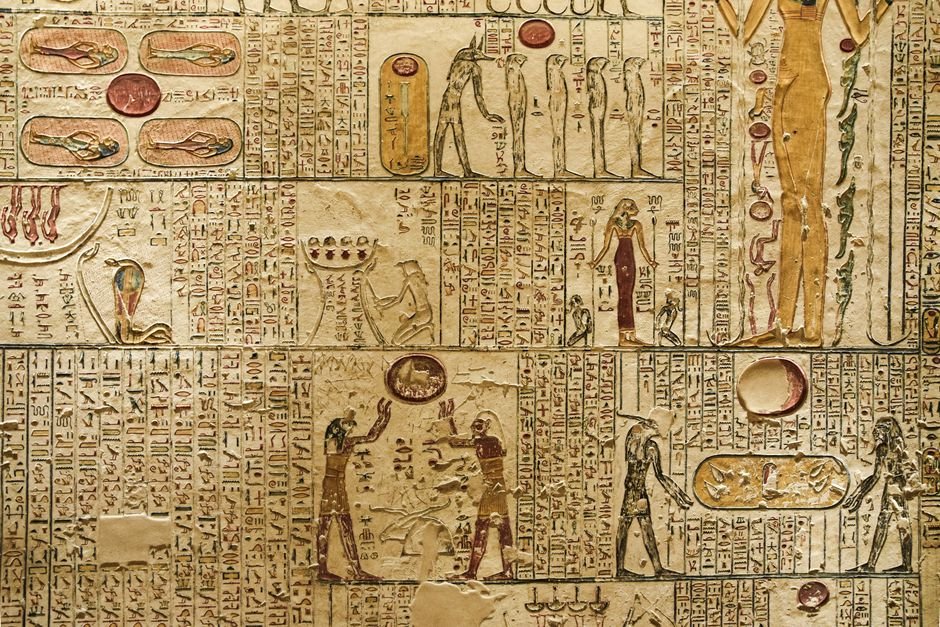
Go to any museum with ancient Near Eastern stuff. You’ll see it. Divine figures, winged beings, wise kings. All holding a strange, rectangular bag. This isn’t just a Mesopotamia thing. Egyptian hieroglyphs (the Ankh with Thoth). Mesoamerican art (Olmec “Jaguar-Man,” Maya gods). Indian carvings (behind Shiva). Even on the Vulture Stone at Göbekli Tepe. One of the oldest huge stone sites anywhere.
These ain’t just regular purses. Figures of divinity. Or super smart kings. They carry these bags. They mean wisdom. Power. Life-giving stuff. Or advanced tools. Some scholars even think the pinecone-like objects often held with them point to the pineal gland. The “third eye.” Spiritual awakening. Early on, people just thought they were seed containers. But their constant presence. Being with “gods.” Across cultures that couldn’t possibly talk to each other. All meaning deep knowledge. Pretty compelling, yeah?
Many of these “Anunnaki” types with bags? Now believed to be Apkalu. “Seven wise ones.” Enki sent them to re-teach civilization after the Great Flood. They were a mysterious, human-like bunch. Traveled the world. Rebuilding after disaster. Imparting lost knowledge. So, the bags could be symbolic storage for this wisdom. Tools for fixing things. Not breaking them.
Historical Suppression & Manipulation: Our Hidden Past
Why don’t we know more about all this cool stuff? Because the truth about our past often gets hidden. On purpose. Groups like ISIS destroying Mesopotamian sites. And the Iraqi National Museum getting looted by troops. Thousands of old tablets and artifacts just disappeared. Smuggled to western countries, they say. Just opportunity? Or was it to hide info that could screw up current beliefs? Religious. Historical. Scientific. All of it.
Documents show old rulers. Saddam Hussein. Nebuchadnezzar. They knew Babylon was super important. Maybe strategically. They even tried rebuilding it. The idea of “divine right” to rule. “Blue-blood” ancestry (like the Nephilim in old texts). Goes back thousands of years. Points to powerful elites trying to stay in control. By messing with history records. When the truth comes out, it’s not just a history lesson. It changes everything. Shifts your whole outlook.
The story in tons of ancient writings is wild. Humans made by outside forces. Civilizations restarted again and again. Super advanced tech. Used by beings we called “gods.” It’s a trip into a past way more complicated and mind-bending than anyone admits. So, next time you hear “ancient aliens,” don’t just brush it off. The puzzle pieces are out there. Just gotta be brave enough to look past the mainstream story.
Questions People Ask
Q: Who are the Anunnaki, really?
A: So, ancient Sumerian texts say the Anunnaki were these superior rulers. Called “gods.” Flesh-and-blood, totally advanced. Came from the sky. And they played a major role in making humans. To work for them.
Q: How do ancient alien theories link up with flood stories?
A: Well, a lot of flood myths. Sumerian, Hebrew, you name it. They all sound super similar. A god or gods get mad. Decide to wipe out the world with water. Some chosen person gets warned. Builds a big boat. Saves family. And animals. People think these are shared memories of a real disaster. Maybe advanced tech or intervention by these “gods” caused it.
Q: What’s the deal with those “bags” ancient figures hold?
A: That mysterious bag. Seen in carvings and art from all over. Mesopotamia, Egypt, Mesoamerica. It likely means wisdom. Or knowledge. Maybe advanced tools. Often carried by “gods” or “wise ones.” They taught humanity how to be civilized. Especially after big destructive events. These figures, sometimes called Apkalu, probably had the job of rebuilding society’s knowledge from scratch.