What If the Earth Stops Spinning? Total Chaos
Ever thought about a really, really terrible day? Us Californians, we’ve seen plenty of crazy weather – wildfires, atmospheric rivers, it gets nuts out here. But now, picture something so weird, so completely disastrous, it makes all our usual troubles look like a mellow afternoon at the beach. What if the Earth Stops Spinning? Seriously. Forget traffic on the 405; this scenario? A whole new level of bad.
Our planet whirls around at about 1,600 kilometers per hour right at the equator. That’s super fast. We don’t feel a thing, though, ’cause everything, including us, moves perfectly along with it. A stable trip. But what happens if that familiar movement just… quits?
Everything Flies East
Okay, imagine you’re chilling, smoothie in hand, by the ocean. One moment, peaceful. The next second? Gone. You, your drink, the sand, beach chairs, cars, even animals – anything not bolted down solid – would launch eastward at freaking 1,600 km/h. Like slamming into a brick wall at highway speed. With zero seatbelt.
And this isn’t some gentle push. This is a brutal, unbelievable blast-off. Think about the pure force involved. Bodies, shattered stuff, whole buildings — all catapulted into a wild, sky-high mess of smash-ups until air resistance and collisions bring them down. Definitely not in one piece.
Don’t live near the equator? You’d still feel a jolt. Just less intense, since the spin slows down towards the poles. Really far north or south? You might not even notice it. Lucky ducks.
A Global Storm Like No Other
But wait, there’s more. Even if by some miracle you survived that first insane fling, your problems have only just started. The Earth stops, but its atmosphere? Nope. Still going. At roughly 1,600 km/h.
Think about a hurricane with 100 or 200 km/h winds. Now make it eight times stronger. The atmosphere turns into a planet-wide, scouring windstorm. Massive. Almost nothing humans built could take that. We’re talking winds four times faster than anything ever recorded. Forget your “chill spot”; it’s a tornado alley from hell.
Oceans Go Bonkers – Giant Waves and New Coasts
Water, just like air, has its own push. When the planet slams its brakes, the oceans don’t get the memo right away. They’d keep surging east. Giant tsunamis. Not your average Pacific rollers; these are gigantic, continent-gobbling walls of water.
All coastlines? Wiped out. Whole landmasses would get shoved under or completely messed up. And another thing: the Earth’s spin makes the water around the equator a little higher. No more spin? Those equatorial waters would rush right for the poles. So, huge, new land areas could pop up by the equator. While the polar regions? Totally flooded. A totally different world.
Earthquakes Everywhere! Volcanoes Go Wild!
Our continents? Always on the move, riding on melted rock. Earthquakes, volcanoes happen. Usually slow. Can’t even tell. But now?
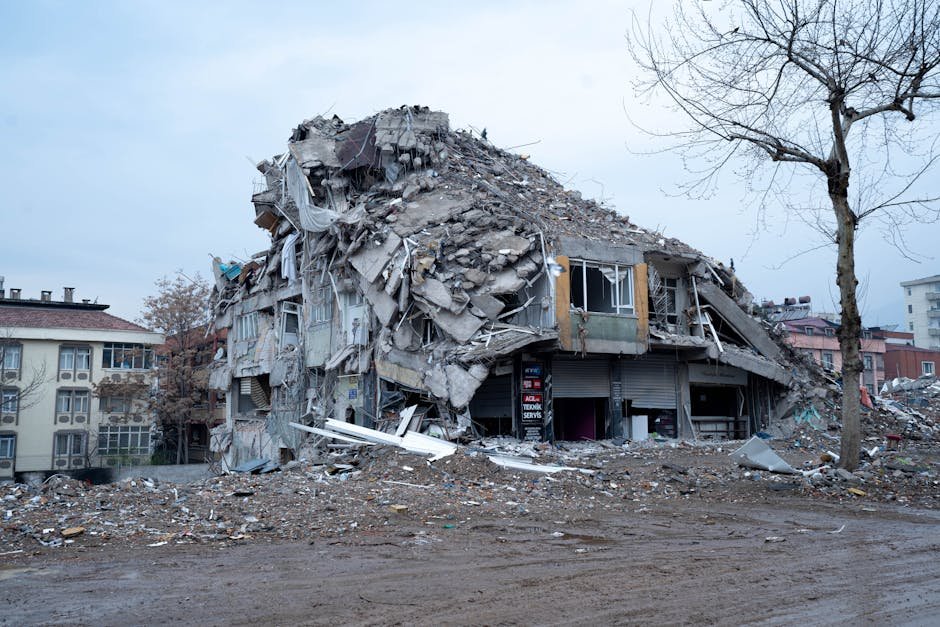
A sudden stop of the planet’s spin would stress the Earth’s outer shell like crazy. Imagine suddenly slamming the brakes on a giant, delicate, perpetually moving puzzle. Tectonic plates would wrench, tear, and smack into each other. Hard. Gigantic, planet-shattering earthquakes. Volcanoes blow. Literally. New mountain ranges might just appear overnight. Not just California shaking; the whole planet just comes unglued.
Long Day, Long Night
Life on a non-spinning Earth? A super drastic change to its basic rhythm. The planet would still orbit the sun, sure. But a “day” would last a whole year – six months of non-stop sunlight, then six months of endless night.
The side facing the sun would roast. Temperatures way over 100 degrees Celsius. The night side? Deep freeze. Most life, built for a 24-hour cycle, would die off. Some animals might hack it, like penguins who already handle wild light changes. Humanity? We’d have to chase the “twilight zone” – that thin band of comfy temps between baking and freezing. Forget houses; just survival.
Magnetic Shield: Poof!
The final blow? If the Earth’s core stopped spinning — which it probably would if the whole planet halted — we’d lose something super vital: our magnetic field. This field, made by liquid iron swirling in the core, keeps us safe from nasty solar zaps and cosmic rays.
No shield? Earth becomes totally exposed. And the atmosphere, without that magnetic protection, would slowly get ripped away by cosmic winds. Our DNA? Exposed to raw radiation. Bad mutations. Eventually, just like Mars, our beautiful blue marble would turn into a dead, dried-up rock. No life at all.
Is This Even Realistically Possible?
Alright, all that doom and gloom stuff needs a reality check. A sudden stop? Impossible. The laws of physics just don’t allow it. Unless something totally insane happened.
But yeah, the Moon’s gravity does slow Earth down. Just one second every 50,000 years. If we’re still around in a few billion years, we’ll be more worried about the sun blowing up into a red giant than a slower Earth.
A giant object crashing into Earth, though? That could mess up our spin. They think our Moon even formed from some ancient crash with a proto-planet called Theia. That crash also tilted us, which gives us seasons, thankfully. But a collision like that today? Earth would be a molten lava ball way before we cared about its spin. And a rogue black hole showing up? Well, Earth’s spin would be the absolute least of our worries then.
So, while these scenarios make for killer movies, just chill out. The chances of Earth suddenly stopping its spin are beyond tiny. We’re super lucky to be right here on this blue rock, spinning perfectly, protected by its magnet powers, and full of life. Seriously, enjoy every bit of time on this planet. There’s nothing else like it.
Quick Facts
How fast does the Earth spin normally?
About 1,600 kilometers per hour at the equator. This speed drops as you head toward the poles, hitting zero right at them.
Why can’t we feel Earth spinning?
We don’t feel it because everything, including us, the air, and the ground, moves at the same steady speed. Like being in a car cruising smoothly on the highway.
What stuff could slow down Earth’s spin?
The Moon’s gravity slows us down, super slowly. Like one second every 50,000 years. Other big, crazy events like a planetary crash or a black hole encounter could hugely affect the spin, but those are super unlikely and would probably destroy the planet anyway.