Quantum Computing: Google’s Willow Chip Just Blew Our Minds
Ever wonder if we’re sprinting toward a whole new way of computing? Wild stuff. Google just dropped a hella big bomb on the tech world. Revealed their new Willow quantum chip. This isn’t just another processor, nope. Google claims this 105-qubit marvel is so advanced it can solve problems in just five minutes. Yep, five minutes. Imagine tasks that would stump the world’s beefiest supercomputers for billions of years? Willow handles ’em. That’s a mind-bending claim. A giant shake-up for quantum computing.
Google’s Willow Chip: A Huge Leap with 105 Qubits
So yeah, the Google Willow chip news? Got everyone talking. Its reported power to crack problems that are basically impossible for regular machines is staggering. We’re talking timescales. Timescales that make the universe’s whole existence look like a quick lunch break.
And this chip? Not a bolt from the blue. Back in 2019, Google showed off their 53-qubit Sycamore chip. Caused a stir with its “quantum supremacy” claims. Willow builds on that earlier work. Pushing the limits way further. The whole point? Tackle one of the biggest challenges in quantum computing at scale.
Qubits: The Real Difference-Maker
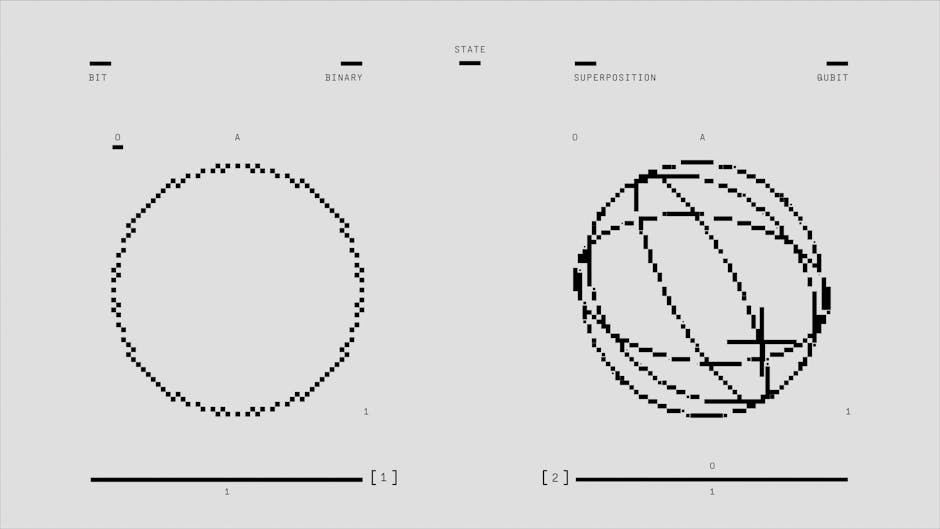
But what makes these machines so different from, say, your fancy gaming PC? Alright. Classic computers operate on bits. These are simple data units, either a 0 or a 1. Just electrical signals. Like an old telegraph sending Morse code. Simple on/off beats.
And then there’s quantum computers. They completely change this idea with “qubits.” Unlike those standard bits, qubits can represent both 0 and 1 at the same time. All thanks to something called superposition. This means they can process a ridiculous amount of info, all at once. Big time parallel processing.
Think about it this way: your regular computer, phone, or supercomputer – it handles tasks one by one. Blindingly fast, sure. But it’s a single data stream flow. Qubits? They explore multiple possibilities simultaneously. A totally different computational vibe.
Why Quantum Won’t Be Running Your Games (Yet!)
Does this mean we should toss our current supercomputers? Grab quantum machines to play the latest games? Not a chance. The answer? Hard no.
Because even if a quantum chip like Willow is quadrillions of times more powerful than your home PC, it won’t fire up your favorite games. Quantum computers excel at very specific problems. Those specially designed for quantum algorithms.
And another thing: if a problem isn’t structured to use quantum mechanics, a traditional computer usually still wins. It’s like putting an F-16 fighter jet against a massive oil tanker; both are powerful. But they conquer different kinds of jobs.
The Hella Huge Challenge: Keeping Qubits Happy
Now here’s the kicker: qubits are incredibly, almost impossibly, delicate. The tiniest outside disturbance—a bit of heat, a slight shake, even stray electromagnetic fields—can make them lose their quantum state. Hello, errors!
This extreme sensitivity is the biggest hurdle. The more qubits you try to cram in, the higher the error rate. Making it hella tough to get reliable calculations out.
Scientists? They’ve been on this problem since the 1960s. Getting these errors down to a manageable level? Super important for quantum computers to move from just ideas to actual tools.
Extreme Chill Zones: Where Quantum Computers Live
To fight these notorious errors, quantum computers demand extreme conditions. We’re talking specially designed, super-insulated cryostats. Think massive thermos bottles.
These chambers cool the qubits to ultra-low temperatures. Often just fractions of a degree above absolute zero. Super cold. The colder it gets, the less outside interference there is to mess with those delicate quantum states.
But even with all this crazy isolation, errors still pop up. Engineers constantly implement fancy error correction mechanisms. Google claims Willow has made a huge step here, suggesting a new technique allows them to decrease the error rate. Even as they increase the number of qubits. That’s a game-changer. Big time.
Everyone’s Pumping Money Into Quantum Research
It’s not just Google making waves, either. Almost every major tech company you can think of—IBM, Microsoft, Amazon, Intel—is pouring resources into quantum computing research and development.
Companies around the globe are racing to build their own quantum systems, invent new algorithms, and find real-world uses for this mind-bending technology. The global tech scene is definitely super keen on this whole area.
Even smaller players are getting in on the action. Recently, a basic quantum computer service launched in Turkey. Marks a way in for more entities. The overall vibe? Intense, competitive, but everyone’s pushing hard.
The Quantum Revolution Isn’t Here, But It’s Much Closer
Google isn’t overselling it. Willow is a monumental chip. It genuinely can solve incredibly complex, quantum-tailored problems in minutes. Problems that would take traditional machines unimaginable eons. Seriously.
But fully unlocking quantum’s vast potential? That’s still a journey. We haven’t quite figured out everything these machines can do beyond these very specialized tasks. Yes, quantum computers are potent, but their full, widespread usability is still evolving.
This latest Google advancement, especially that reported breakthrough in handling errors at scale, represents a massive step forward. It brings the quantum dream way closer to reality. Maybe even within this century. Keep an eye on this space; when quantum truly arrives, the world will fundamentally change. In ways we only just begin to imagine.
FAQs
Q: Are quantum computers going to replace all traditional computers soon?
A: No. They’re incredibly powerful for specific tasks. But quantum computers aren’t universal replacements. They’re great for problems suited to quantum algorithms. But they won’t be running your everyday apps or games anytime soon.
Q: What is a qubit, and how is it different from a traditional bit?
A: A traditional bit represents info as either a 0 or a 1. A qubit, though? It uses quantum mechanics. Exists as both 0 and 1 simultaneously (superposition). Allows for exponentially more complex and parallel calculations.
Q: Why are quantum computers kept in extreme isolation and at ultra-low temperatures?
A: Qubits are incredibly fragile. Prone to errors from outside interference. Heat, vibrations. Extreme isolation and near-absolute-zero temperatures minimize these disturbances. Helps qubits stay stable for calculation. Total chill zone.