California Bridges: What the Heck Are They?
Ever stare at one of those HUGE things flying over a canyon? Or stretching across a bay? And you just gotta wonder, “How in the hella did they even build that?” Especially here, in our wild California landscape. It throws us constant curveballs. Keeping our roads connected? Often means engineers push it to the absolute limit. These California bridges? Not just some chunks of concrete and steel. Nope. They’re amazing construction triumphs, vital roads linking up all our chill spots and crazy-busy cities. But what actually makes one bridge different from the next? Simple. It’s all about how they stand up to serious real-world forces. Wild stuff!
Beam Bridges: Our Everyday Workhorses
Think really simple. A beam bridge is basically just a horizontal plank going between two supports. See them everywhere. Overpasses separating traffic lanes, for instance. Your everyday heroes. Most modern beam structures around the Golden State use concrete girders. Sometimes, if they want to be a bit smarter, engineers go for box girders. These are like closed tubes. Uses material better, even if they’re a tiny bit trickier to put together.
The main snag? They often can’t go super far. The longer a beam gets, it just gets heavier. Until it’s fighting to hold up its own weight, let alone a ton of cars and trucks.
Truss Bridges: Light, Strong, Stretchy
Need to cross a bigger gap without all that bulk? Easy. Here comes the truss. This design builds a stiff, light setup from a bunch of smaller parts. Unlike those simple beams, each piece of a truss mainly deals with forces right along its length—either pushing it together (compression) or pulling it apart (tension).
This direct pressure makes the design simpler. Also lets trusses span bigger distances than solid beams and save on material. You’ll see all kinds of arrangements. A “through truss” has the road at the bottom; you drive right into it. A “deck truss” hides its bits under the road.
Some trusses are just cool to stare at. Like the lenticular kind, which looks kinda like a lens. You might also spot temporary Bailey bridges. These were for WWII, mind you. Still pop up for quick crossings when a main route needs fixing. And another thing: those charming covered bridges? Many are timber trusses. That cover? It saves the wood from the elements. Smart, right?
Arch Bridges: Timeless, Strong, Compressed
This design has been a builder’s go-to for thousands of years. And for good reason, too. Arch bridges truly shine by sending their weight right into their supports. Pure compression. Just imagine those old Roman aqueducts. Stone and mortar. Arches were their only shot at spanning wide gaps with what they had.
Today, even with fancy steel and concrete, arches rule. Use materials super efficiently. But they can be a real pain to build. Often need heaps of temporary supports. Until that curve is done, and the “keystone” locks everything in place.
Arches come in a few types. A deck arch puts the road on top. A through arch dangles the road below. Part of the curve sticks up above the street. That section between the road and the arch has a cool name: the spandrel. Oh, and a moon bridge? It’s an over-the-top arch, usually crazy steep, just for folks walking over skinny canals.
One critical thing about these bridges? They create sideways forces (“thrusts”) at their ends. Serious arch bridges demand HUGE ends (abutments) to push against. If you spot an arch on thin posts? Probably a “tied arch bridge.” A sort of string connects the arch ends, like a bow. That string fights those thrusts on the inside. So it’s more like a structural truss. Not pure arch magic.
Cantilever Bridges: A Balancing Act for Bigger Gaps
Need to make a beam bridge span a lot farther? A cantilever bridge fixes it. Changes how the supports work. Instead of being held at both ends, sections of the road balance on central posts. They just stick out.
This trick puts most of the structure’s heft right on the supports. Not in the middle of a big span. It’s a powerful idea for longer crossings. Helps engineers tame big distances.
Cable-Stayed & Suspension Bridges: The Real Big Boys
When you’ve got to jump over the widest, wildest stretches? Steel cables are your best pals. These designs use steel’s insane strength. Make some of the most famous California bridges.
Cable-stayed bridges hold the deck up from above. Cables attach straight to super tall towers. Often fan out, too. Gives the bridge its signature look. Simplicity means some dramatic shapes. Wild shapes, even. For slightly shorter distances, you might see an extradosed bridge. A newer combo type. It uses cables less to just hold the floor up, more to squeeze the main beams. Makes it stiffer.
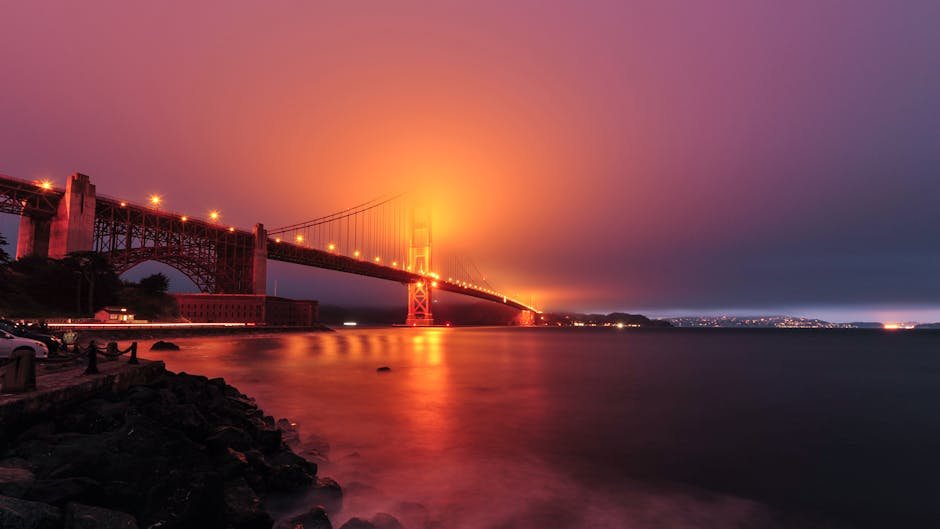
Then you hit the truly majestic suspension bridges. These, my friends, are the absolute big boys. Known for the planet’s longest spans. Hello, Golden Gate! Here’s how: huge main cables drape over massive towers. The road deck just dangles underneath. On vertical hangers. Most of the bridge’s ginormous weight funnels right through those towers. Down into super deep foundations. And huge anchorages at each end? They stop the main cables from just yanking out of the ground. Super graceful, super slender. Also ridiculously pricey to build and keep up. Only for when literally nothing else will work.
Simple suspension bridges (like those old rope bridges) are usually just for walkers. Not very steady. But a “stressed ribbon” bridge builds on that idea. Runs cables right into the deck. Better stability. But, again, mostly for feet.
Movable Bridges: Get Outta the Way!
Look, sometimes a bridge can’t just sit there. It’s gotta move. When boats need to pass through? You’ll see a movable bridge. Plenty of folks just say “drawbridges,” like from medieval castles.
These things come in different forms. A bascule bridge hinges and swings its road up. A swing bridge rotates sideways. A vertical lift bridge just hoists the whole deck straight up. Keeps it flat, like a table. Every single one? A special fix for a particular spot and a busy waterway.
Floating Bridges: Just Chill on the Water
What if you don’t need regular foundations? Or the water’s just way too deep for them? No problem. Sometimes you can just float a bridge right on the water. These “floating bridges” use bouncy supports. Often hollow concrete pontoons. Pumps inside keep them buoyant.
Not common for huge highways. But they’re brilliant for certain situations. Even military uses. Posing some tough engineering tasks: stopping water from getting in, or dealing with the water moving itself. Crazy, right?
Other Cool Crossings & Combination Designs
Not all bridges fit into neat boxes. Some designs just get real creative. You’ll spot “low-water crossings” in places that get flash flood all the time. They’re built to disappear under water when it swells. BUT ALWAYS AVOID DRIVING THROUGH WATER GOING OVER A ROADWAY. Seriously, it takes so little to sweep your car away.
And then there are viaducts. Just super long bridges with tons of spans. Often crossing wide valleys or acting like elevated freeways. Common sight in our cities.
The cool part? Engineers often mix them up. You might literally see an arch bridge stiffened with those stressed ribbons. Or a cable-stayed setup mashed with suspension bits. Hello, incredible creativity! Paying attention to these amazing structures? It totally opens your eyes to everything around us.
Frequently Asked Questions
Q: Why are most covered bridges made of wood?
A: Many classic covered bridges are timber truss bridges. The roof and sides protect the wood. Because wood gets damaged by weather and other elements. It helps keep the trusses strong.
Q: What’s the main difference between an arch bridge and a tied arch bridge?
A: A normal arch bridge sends side (“thrust”) forces to massive pieces on either end. A tied arch bridge, though, connects the arch’s ends with a cord. That string resists those thrust forces inside itself. Like a bowstring, actually. So a tied arch doesn’t need huge abutments.
Q: Why are suspension bridges so darn expensive to build?
A: Suspension bridges, made for the world’s longest spans, cost a fortune. It’s because of their unbelievably huge main cables. And the complex towers. And the giant anchorages needed to stop the cables from just ripping out of the ground. Also, they often need more stiffening (beams or trusses!) to stop movement from wind and traffic. Makes them super complicated and pricey to build and keep going.