San Francisco’s 1915 Panama-Pacific International Exposition: The Real Story, No Myths
Ever scroll past those incredible old photos of the Panama Pacific International Exposition San Francisco and wonder how the heck they pulled something like that off back in 1915? Massive domes. Towering spires. Fancy columns. It just looks like another universe, way too grand for a time of horse-drawn carriages. And that’s exactly why some online whackos grab onto it, spinning tales of lost empires and hidden histories. But seriously, what’s the deal with those buildings?
The Tartaria Conspiracy Theory: A Modern Myth
Those videos? Bet you’ve seen ’em. Claims of a vast, peaceful, ancient empire called Tartaria. Some hidden group supposedly erased it from history. This theory, which has gone hella viral on social media platforms like TikTok, says they had super tech, wireless power, huge buildings… all from this forgotten time. Basically, we’re a “reset” society. Forgot everything.
But dig a little, and you find a much more recent origin. The Tartaria conspiracy theory actually surfaced from some intense Russian propaganda in the 1970s and ’80s, started by Anatoli Fomenko, a mathematician. Then, Nikolay Levaşov, an occultist from Russia, twisted it. Made it all about a racist, mystical narrative. About a made-up Slavic Aryan Empire. Western powers apparently zapped it. It’s all fake. Not real history. Just popped up online, thanks to algorithms. Because old stuff looks cool. No evidence, though.
“Tartaria” on Old Maps: Just Geography, Not an Empire
These Tartaria folks? They trot out old maps. Show you “Tartaria” or “Tatary” all over Asia. Say it’s proof. So definitive. The name sounds super mysterious. Like a lost empire, right?
Here’s the real deal: nope, not a massive empire. “Tartaria” was simply a general name Euro mapmakers slapped on a huge, mostly unknown chunk of land. From the Caspian Sea clear to the Pacific Ocean. That’s it. The name came from the Tatar people. Euros met them during Mongol invasions. Also, “Tartarus” from Greek mythology – like an underworld. So, “distant, barbaric land.” Pretty rude. But in the 1800s, maps got better. “Siberia,” “Manchuria,” those replaced the broad “Tartaria” thing. No vanished empire. Just better maps. More precision.
Half-Buried Buildings: Urban Planning, Not Mud Floods
Watch enough conspiracy videos? You’ll inevitable hit the “Great Mud Flood” story. Guaranteed. They show you pictures. Half-buried windows, doors. Say it’s proof of a giant mud catastrophe. Whole cities buried. Populations gone. Scary stuff. Yeah, freaky.
Look, it’s simpler. Way more practical. Just old-school city building. Lots of big buildings had basements. For kitchens. Servant rooms. And, super important, coal storage. Those openings down low? Coal delivery. Boom. And another thing: cities like Chicago back in the 1850s, or Seattle after its big fire? They literally raised them. Bad drainage. Stinky streets. Floods. A nightmare. Engineers. Total pros. Used huge hydraulic jacks. Lifted whole blocks. Put in sewers. Filled streets higher. So what these conspiracy buffs call a mud flood? Nah. It’s really showing off amazing human engineering. Folks fixing disease problems, making cities better.
World’s Fairs & the 1915 Panama-Pacific International Exposition
Okay, now for something right here. Our own Panama Pacific International Exposition San Francisco. Conspiracy theories say those amazing World’s Fair buildings? Actual Tartarian old-timers. Showed ’em as “temporary.” Then blew ’em up to hide the real story. Come on.
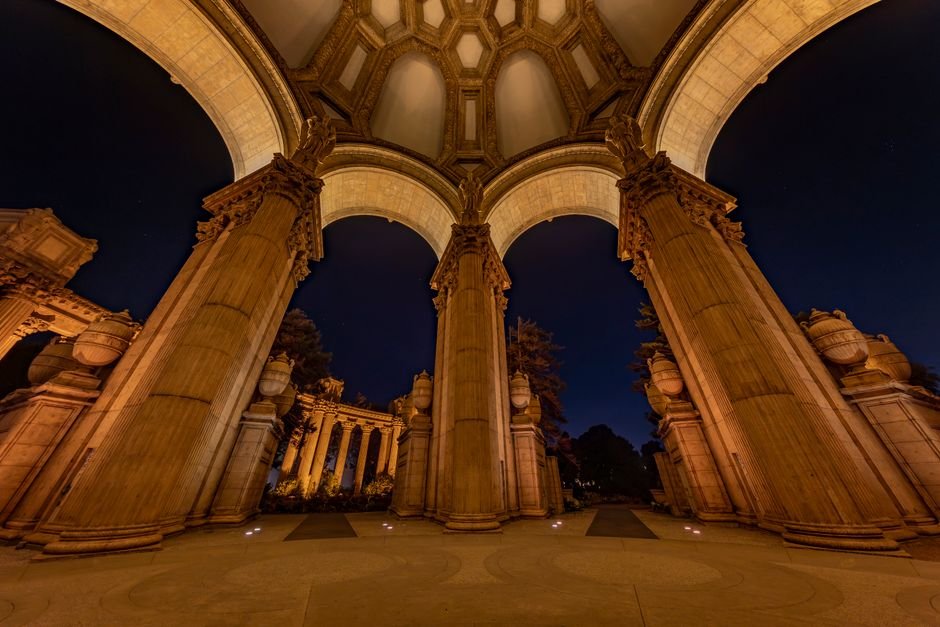
Hold up. Real talk: those cool Roman and Greek buildings at fairs? Like the Chicago Columbian Exposition in 1893, and our own 1915 show here in Fog City? Not ancient stone. Nope. Huge, pretend sets. Like movie props. Made from “staff.” Light. Cheap stuff. Plaster, cement, hemp fibers. Over wood frames. Pure spectacle. Not built to last. Show off industries. Show off culture. For maybe a few months. Then demolished fast. Or burned. Not sturdy. Cheap to build. So, big, impressive displays. Didn’t cost a fortune. Didn’t take ages. Smart planning. The Palace of Fine Arts in San Francisco. Still standing! It’s one of the few “staff” buildings that got rebuilt. With stronger stuff. People loved it too much to trash it. Human art. Not a cover-up. Period.
Empty Streets in Early Photographs: A Snap of History, Literally
And another thing: those empty streets in old black-and-white photos? From the 1840s, 50s? Tartaria folks always bring it up. They say, “See? Catastrophe! No one left!”
But no global reset. Just how cameras worked back then. Those old cameras took forever. Minutes. Not split seconds. Minutes, people. So, anything moving. People, buggies… Blurry. Or just gone. Buildings? Super sharp. Photographers even picked longer exposures sometimes. Better light. Get rid of distraction, you know? Empty streets? Just vintage camera tech. We know this.
Orphan Trains and Incubator Babies: Real History, Misinterpreted
And this conspiracy? It tries to grab onto real history. Painful stuff! Like Orphan Trains. Or incubator babies for preemies. They twist it, too. Say it’s “population control.” Or a “new slave class” after Tartaria bit the dust. Ugh.
Yeah, Orphan Trains. 1854 to 1929. Wild. Total shocker in American history. Like, a quarter-million kids. From cramped East Coast cities. Shipped out on trains to rural spots. For adoption. Or work. Often harsh work. It was messed up. A brutal solution for a massive real problem. Poverty. Disease. Exploitation. So many kids orphaned, abandoned during the Industrial Revolution. Problematic? Absolutely. But it was about real kids. Real lack of labor. Not some “global reset.”
Incubator babies, too. What a story! Massive medical win. Hospitals often just let preemies die back then. Too pricey. But Dr. Martin Couney? He pushed this incubator tech. Brought it over from Europe. Hospitals said no? So he showed the incubators. And the babies in ’em! World’s Fairs. Coney Island. Charged a quarter. Paid for their care. Genius, kind of. Not cloning. Not population control. No way. Just a desperate, smart fight for lives. Against tough times. Limited medical supplies. Brutal money situation. Thousands of babies, saved. Now that’s an inspiring tale. Real grit.
Real history? Messy. Hard. Sometimes horrifying. But way more interesting than any fake conspiracy. It’s about smart people solving problems. Societies messing up, then getting better. Real pain. Real wins. Real humans. When we ignore real achievements — or real screw-ups! — with these made-up stories? We lose out. Don’t understand ourselves. Don’t know our roots. And we miss appreciating so much. Engineers lifting whole towns. People fighting for kids. Doctors saving babies with basic, brilliant ideas. Think about that.
QUICK ANSWERS
Q: What was Tartaria according to old maps?
A: “Tartaria” was just a big label. European mapmakers used it for a super huge, mostly unknown Asia region. From the Caspian Sea all the way to the Pacific Ocean. Not a unified empire, just a description.
Q: Why do some older buildings appear to have “half-buried” floors or windows?
A: Two reasons, mostly. Basements were common for coal storage or utility rooms, so those ground-level openings were just practical access. Also, some cities like Chicago and Seattle literally raised their street levels due to bad drainage and floods. Made lower floors look “buried.”
Q: Were the cool buildings at World’s Fairs, like the 1915 Panama-Pacific International Exposition in San Francisco, actual ancient stone structures?
A: Nah. They were mainly temporary, built from “staff” — a mix of plaster, cement, and hemp fibers over wooden frames. Super decorative, but just for the show. They were quickly torn down or torched after the fair, not meant to be permanent or ancient ruins.