The Origin of Life: A Scientific Explanation for Earth’s Beginnings
Ever wonder what went down billions of years ago? Like, before Instagram and avocado toast, when our planet was just a hella wild rock? How did the spark of Origin of Life even begin? Forget ancient myths about cosmic stomach aches. Today, we’ve got science. And it paints a seriously good picture of how the ultimate start-up—life itself—kicked off.
Let’s dive in.
Hydrothermal Vents: The Cradle of Life?
Imagine Earth 4 billion years back. No blue skies. No chill spots. Just a terrifying, toxic sphere always being hit by meteorites. Scarred by volcanic eruptions. Yet, something wild happened in this real hellscape. A self-replicating molecule, or maybe a bunch of them, popped up. Not in some gentle pond. But deep underwater.
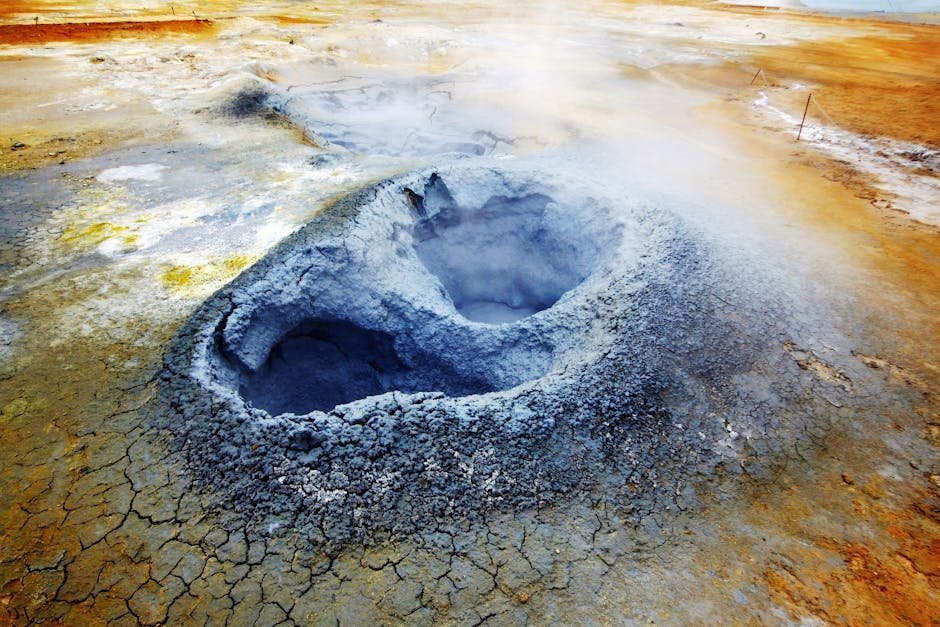
Scientists point to alkaline hydrothermal vents on the ocean floor. Picture cracks in the seabed. Oozing warm, alkaline fluids. These aren’t just any old cracks, though. They form when seawater reacts with minerals like olivine, which loads the water with hydrogen and lets out heat. When this warm, mineral-rich fluid met the icy cold ocean, it solidified. Building fragile, towering structures. Sometimes 60 meters tall.
These vents weren’t just weird rocks. Also, they gave everything needed: liquid water, an energy source, and carbon-based organic chemicals. It’s thought that inside these mineral chimneys, basic rock, seawater, and carbon dioxide, given enough time (millions of years, no biggie), made abiogenesis—life from non-life—almost certain. Our entire planet felt like a giant, boiling soup just trying out endless possibilities.
Sparking Life: The Miller-Urey Experiment
Okay, so how do we know any of this without a time machine? We can’t go back 3.8 billion years. But some really smart people brought that ancient vibe right to us. In 1952, Stanley Miller, then a grad student at the University of Chicago, with his advisor Harold Urey, ran an experiment that changed everything.
They rebuilt early Earth conditions in a lab. They sealed a mix of methane, ammonia, water, and hydrogen gas in a sterile flask. Then, to copy the high-energy environment of early Earth—think lightning, volcanoes, UV radiation—they zapped the mixture with electrical sparks. They even made it rain.
After a week, the miracle happened. Inorganic materials had changed into organic molecules. Amino acids, the basic parts of proteins, showed up. This huge Miller-Urey experiment kicked off a bunch of similar studies. All proving that inorganic stuff could become organic. It was a huge step. But still, just the beginning.
The RNA World: Before DNA Ruled All
Once those initial organic molecules formed, they didn’t just chill out. They piled up, getting more and more complex. Think polypeptides. Then nucleic acids. Some of these growing molecules started to look like they could be alive. They were tougher, stuck around longer, and even did crucial reactions. The most successful? They learned to make copies of themselves.
So, here’s the “RNA World” idea. The thought is that before DNA became the superstar for carrying genetic info, and before proteins totally ran the show for chemical work, RNA did both jobs. Because RNA has this neat trick: it can store information, just like DNA, and it can also act like a little helper, sparking chemical reactions.
Its simpler structure suggests it probably came before the tougher DNA. Eventually, DNA, with its superior toughness, took over the information storage gig. And proteins, being way better at speeding up reactions, mostly replaced RNA for enzyme work. But for a key time, RNA was the king.
Endosymbiosis: The Leap to Complex Life
For most of its existence, Earth was microbe central. You had bacteria and archaea. Simple prokaryotes. Basically, tiny bags of chemicals. No plants. No animals. Just endless stretches of rock, sea, and basic, single-celled life. The rise of complex life forms—every plant, animal, and fungus you see—was maybe the most surprising, and definitely one of the most important, events in Earth’s history after life itself began.
Prokaryotes are cool. But they don’t have the fancy inside stuff of eukaryotes. Cells with tiny organs, internal membranes, and skeletons. A single-celled amoeba is to a human what a prokaryote is to a eukaryote. While bacteria mostly stick to chains and colonies, eukaryotic cells team up to build everything. From redwood trees to antelopes. All complex life, every single eukaryotic thing, came from just one type.
This one-time event changed everything. Around 2 billion years ago, a simpler cell swallowed another. We don’t know the exact identity of the host. But we know it took in a bacterium that then lived and divided inside it. This wasn’t a hostile takeover. It evolved into a friendly co-existence. A partnership folks call endosymbiosis.
Over countless generations, that bacterium living inside lost its original identity. And became an organelle: the mitochondrion. Its new job? Powering the host cell. This was the game-changer. Freeing existence from its microbial chains. With energy-producing mitochondria, cells could grow larger, get more complex. And ultimately, start the whole evolution thing that led to us.
Why Can’t Life Just Start Anew Today?
So, if all those ingredients were just lying around, why aren’t new organic molecules just forming into life right now? The short answer: Today’s Earth is a totally different ballgame than our early, rough planet.
For starters, life is everywhere. Because if new, complex organic molecules magically appeared today, they’d be immediately gobbled up by existing organisms. Abiogenesis likely needed a world without things looking for a snack.
And another thing: the atmosphere is super different. Billions of years ago, there wasn’t enough oxygen to cause oxidation, which would simply destroy newly formed complex organic molecules. Our present-day oxygen-loaded atmosphere, while vital for most complex life, actively stops spontaneous organic molecule formation from scratch. Hence, the wild event of living matter emerging from non-living matter only happened once. And that’s why, despite all its wonders, the Bay Area isn’t bubbling with newly formed creatures in its tide pools.
Frequently Asked Questions
Q: What conditions were super important for early Earth to support abiogenesis?
A: The early Earth needed liquid water. And an easy energy source (like volcanic heat or lightning). Also, tons of carbon-containing organic chemicals. Hydrothermal vents on the ocean floor are widely thought to have provided the perfect spot where these factors all came together.
Q: How did the Miller-Urey experiment contribute to our understanding of the origin of life?
A: The Miller-Urey experiment famously showed us that, under conditions thought to have been similar to early Earth’s atmosphere, inorganic molecules (like methane, ammonia, and water) could spontaneously just come together to form organic molecules. Like amino acids. These are the very parts life is made of.
Q: What key moment led to the development of complex life forms like plants and animals?
A: The most critical event was endosymbiosis. An evolutionary process around 2 billion years ago. This is where a simple cell swallowed another bacterium. This bug living inside evolved into the mitochondrion, a tiny organelle that gives power to its host. This allowed for the building of larger, more complex eukaryotic cells that make up all multicellular life.